
Commercial Roofing in Tontitown, AR
On a small Tontitown building the roof is usually flat, and hail damage never shows from the lot. A job over $50,000 takes a full Arkansas license, and the owner confirms it first.
- Pictures of each slope, in your hands
- The price in writing before work begins
- One roofer you deal with the whole way
Call (479) 333-8376
Commercial roofing on a small Tontitown building
A residential job over $2,000 runs on the state registration and a $15,000 bond, but a commercial project of $50,000 or more calls for a full Arkansas contractor license. So the first move belongs to the owner: verify that license and current insurance with the Contractors Licensing Board.
A storefront on the old main road, a shop out on the growing east side, or a parish hall mostly carries a flat or low-slope membrane. A local roofer reads the field, the seams, and the rooftop curbs, then gives a plain condition read before naming a number, and a no-cost inspection starts it.
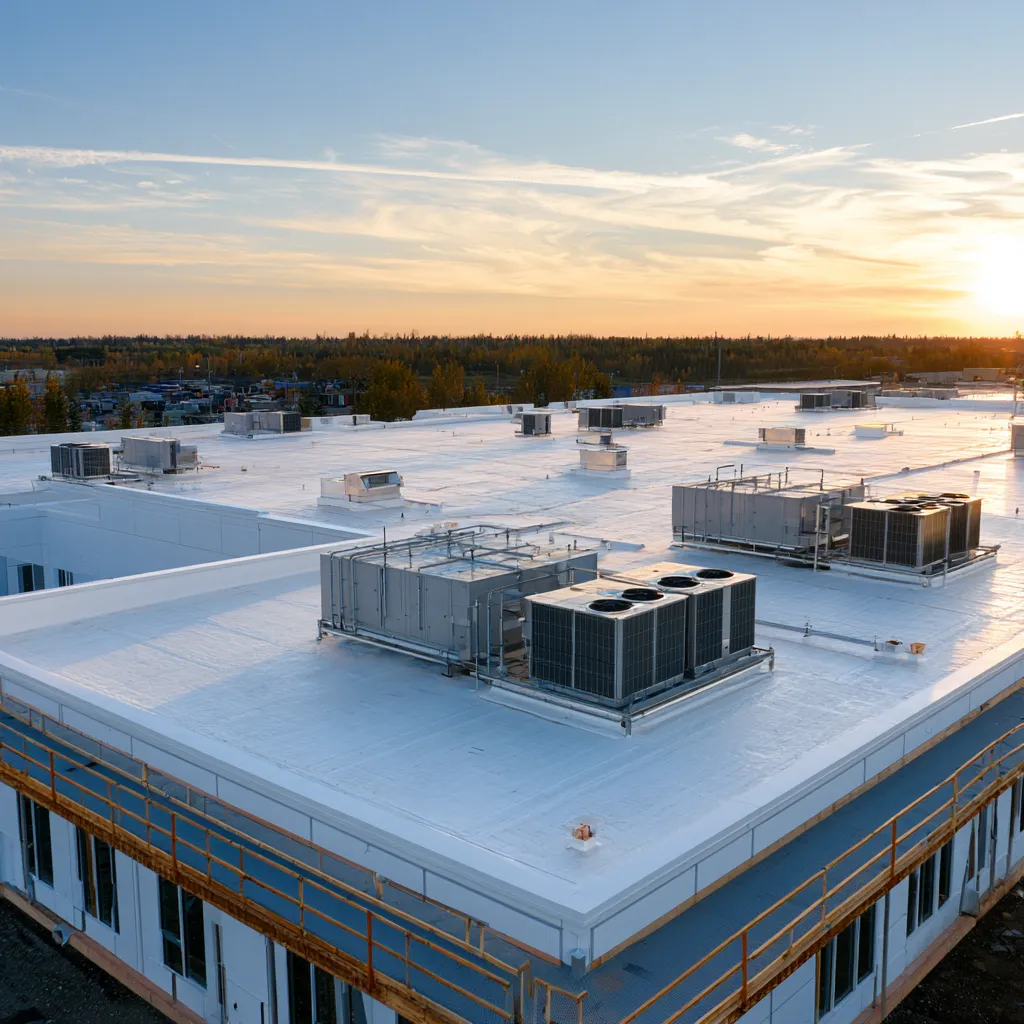
Membranes on a small Tontitown roof
The membrane follows the building, not a brochure. What settles it is how well the deck drains a hard Arkansas rain, how much rooftop traffic the units draw, whether a kitchen vents grease across it, and how the sheet holds up to hail. A roofer reads the roof first and names the system second.
TPO
A white single-ply sheet, heat-welded into one skin, and the usual pick on the newer shops going up on the east side. The light face turns the summer sun back to hold cooling costs down, and since a thicker sheet takes hail better, a roofer sizes the mil to a hail-prone county rather than the thinnest roll a low bid carries.
EPDM
A synthetic-rubber sheet with a long track record, well suited to the wide open deck of a metal farm building or a small warehouse on the edge of town. It serves for decades, and its weak point is the seams, so a roofer keeps an eye on seam upkeep and gives it a look after any hail.
PVC
The sheet to reach for when a kitchen sits under the roof. Welded PVC shrugs off the grease and fryer exhaust that would eat an ordinary membrane, which is why a diner or a cafe on the old main road earns it. Any grease-venting tenant is where the cost pays back.
Modified bitumen
Reinforced asphalt in torch- or self-adhered rolls, thick enough to walk on and to forgive a corner that drains slow. A steady pick for a small building whose roof sees regular foot traffic to the units up top, its layered cap standing up to hail better than a thin single-ply.
Built-up roof (BUR)
Layer on layer of asphalt and gravel, the oldest and heaviest system here, built so that one bruised spot in a ply does not open the whole roof. A handful of the older buildings near the old town core still wear it, where decades of service pay back the heavier install.
Roof coatings
A rolled-on silicone or acrylic layer over a tired but sound roof, a restoration that buys reflective years for a fraction of a tear-off. Two things gate it: a deck that scans dry, since a coat over trapped water just seals the leak in, and a plain call on whether a coating is enough for a roof the hail has already worked.
Not sure what is up there, or how many hail seasons it has quietly taken? One read answers both. A roofer names the membrane, puts a fair number of years on what is left, and notes any hail bruise or open seam, all before repair-or-replace is even on the table. The new roof cost guide breaks the ranges down system by system.
Four scopes, and the read picks one
Four scopes cover almost any roof in a town this size, and a plain read, not a hunch, decides which. Whatever it turns up goes in writing before a crew is booked, with no lean toward the bigger job.
- 01A repair kept to the one fault
- The single failure handled on its own: a lifting seam, a drain that ponds after a downpour, brittle parapet flashing, or a leak where a rooftop unit meets the deck, each tied to whichever membrane is actually up there.
- 02A coating only if the deck earns it
- Worth doing when the insulation below scans dry, so a rolled silicone or acrylic coat renews the surface for a fraction of a tear-off. Over trapped water a coat just seals the problem in, which is why the moisture check comes first and the recommendation after.
- 03A re-roof once the membrane is spent
- A fresh low-slope build, single-ply, modified bitumen, or built-up, fastened for an Arkansas gust and detailed at the seams and edges, put forward only after patching has stopped paying its way.
- 04The coat-or-replace call, weighed openly
- One decision on four inputs, none skipped: the rooftop traffic, whether moisture sits in the insulation, the shape of the deck, and how long you plan to keep the building. All four get weighed on paper before a crew is quoted.
Hail hides better on a flat roof than a pitched one. From the lot a bruised membrane or a split seam reads as nothing, and the county runs a busy hail record. So the first visit shoots close photos of any bruising or seam split, tied to the storm date and shown to you plainly. The storm damage page covers what a flat roof hides after hail.
How a small commercial job runs
The read and the price come before any crew, and the work is fit around your open hours.
Check the license, then read the roof
First the owner confirms the company carries the Arkansas contractor license a commercial job over $50,000 requires, plus current insurance. Only then does a local roofer walk the membrane, the seams, the drains, and the curbs and come back with a plain condition report beside one written figure.
One scope on paper, sized to the building
A repair or a re-roof gets written out and priced to what the building can spend, with each layer and code line on the estimate. Nothing goes to a crew until you have the figure and have said go.
Install to spec, then a last walk
Once the membrane is down, or the repair closed to the written spec, a roofer walks every seam, drain, and flashing one last time, then hands you the workmanship terms in writing. You keep the scope, the photos, and the terms in one place, with a plain note on anything worth watching.
Questions a Tontitown building owner asks
The practical questions a Tontitown owner raises before approving a commercial roof scope.
Q1How do I confirm a roofer holds the Arkansas commercial license?
Q2How does hail show up on a flat roof?
Q3Coat the membrane or replace it?
Q4Which membrane suits a building with a kitchen on the roof?
Q5Who backs a new commercial roof, the maker or the roofer?
Put your Tontitown building on a scope
Bring your building to Tontitown Select Roofing, and a commercial roofer walks the roof, weighs a repair against a re-roof, and prices the scope on a single page. The work waits on your approval, and the schedule fits your open hours.