
Roof Insurance Claim in Tontitown, AR
Not every hailed roof is a claim worth filing. A local roofer reads the damage first, says plainly whether it is a claim, and only then puts every slope on paper so it stands up.
- Pictures of each slope, in your hands
- The price in writing before work begins
- One roofer you deal with the whole way
Call (479) 333-8376
First, whether the damage is really a claim
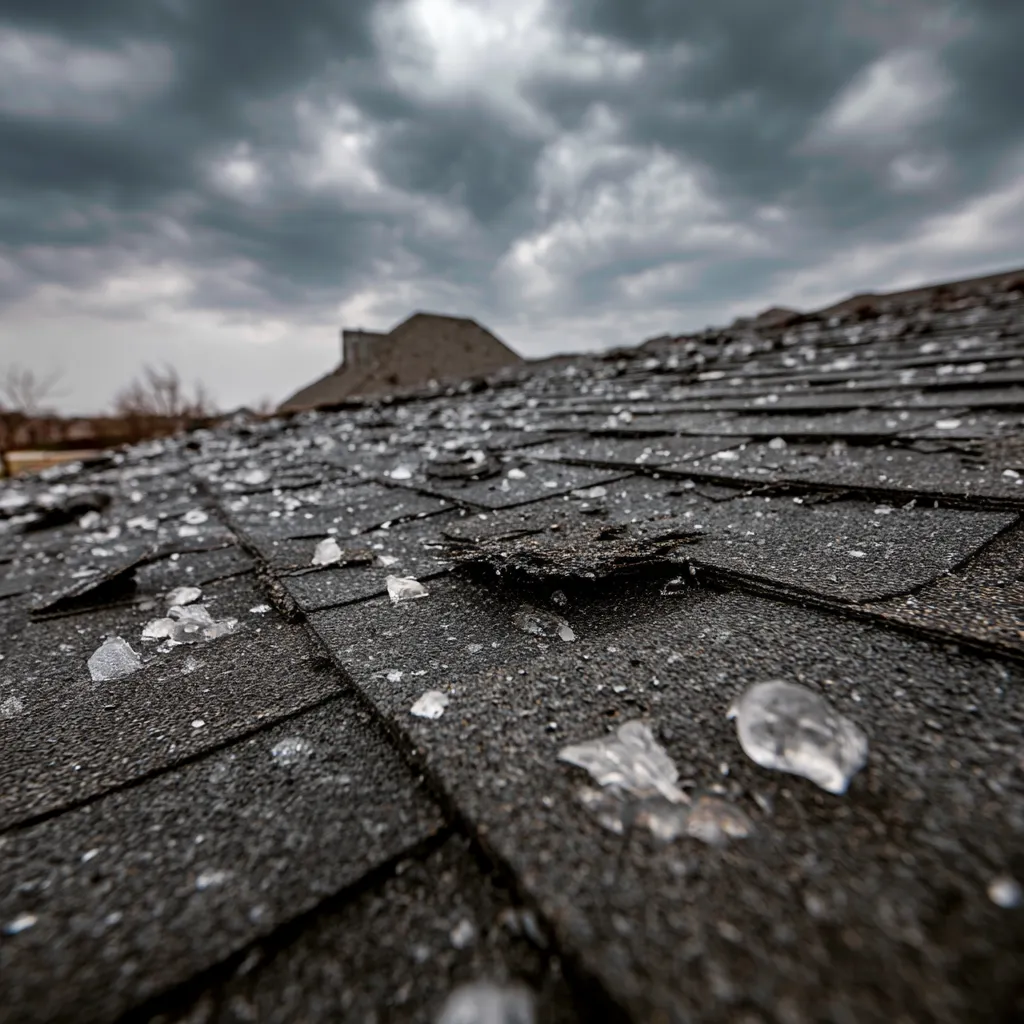
A roof insurance claim in Tontitown, AR should start with a plain question most roofers skip: is the damage actually a claim, or just a repair? Washington County hail is real, yet plenty of roofs come back needing only a small fix, not a filing.
A local roofer reads the roof first and gives you the straight answer, and only if it is a claim does the work turn to putting every slope on paper, there to see rather than argue over. The storm-damage read comes first, and on timing, Arkansas hands most of the deadline to your own policy, so read it and file promptly.
From the first read to the last check
Six steps, each naming a term you will actually meet, and every call along the way stays yours to make, starting with whether you even have a claim.

The walk settles whether it is a claim
The first move is a ladder, not paperwork. Before anything is filed, a local roofer goes up and works the roof one plane at a time, looking for the bruised mat or the split tab a real hailstorm leaves and matching it to a storm the county record can back. What that walk settles is the plain question underneath a claim: is this actual storm damage worth filing on, or a small repair you would rather just handle? It also pins the day the damage happened, the date every deadline later counts from.
date of lossYour policy sets the Arkansas deadline
Arkansas is not one of the states that adds its own roof-claim deadline; here the clock lives mostly in your homeowner policy, and that policy window tends to be tighter than the law behind it. Many policies count a filing or suit deadline from the date of loss, sometimes as short as a year or two, so the safe habit is to read your own policy and file inside it rather than trust a general rule. Your policy and the Arkansas Insurance Department hold the exact dates.
policy filing windowThe call to file is yours alone
Here is where the claim becomes yours, if you want it. With the read in hand and a plain call on the damage, you choose whether to open a claim at all; if you do, you call the carrier yourself and file in your own name, well inside the policy window. The carrier hands back a claim number the rest of the steps refer to. A roofer stays out of this call on purpose, because the claim is yours to open, yours to steer, and yours to skip if the damage does not warrant it.
claim numberBe up there when the adjuster reads it
A week or two on, the carrier sends an adjuster to climb the roof and rule on what the policy owes. Being home for it, with a roofer up there beside the adjuster, is what keeps the hail bruising, the split tabs, and the struck flashing from being missed from the yard. The adjuster still makes the call; the roofer only points to what the first read already turned up.
adjusterWhere the read meets the carrier's list
The insurer returns its scope, the line-by-line list of what it will cover. Held up against what the roofer's read found, any gap shows, and whatever the storm did that the scope left out goes back as a plain written request. A code-required upgrade like drip edge the old roof never had is only covered if your policy includes ordinance-or-law coverage, and decking found soft once the tear-off started is priced and added the same way. The carrier weighs each item on its own, against the photos and measurements already taken.
scope of lossThe held-back money, after the last nail
On a replacement-cost policy the carrier keeps part of the money back, the recoverable depreciation, until the new roof is finished and invoiced. File that paperwork and the held part follows as a second check. Leave the work undone or the bill unfiled, and it simply never comes.
recoverable depreciationHow the payout works, and in how many parts
A hail claim usually arrives as two checks, the smaller one first. What your policy is written on, actual cash value or replacement cost, decides how much of a new roof the carrier funds, which is worth reading before a storm rather than mid-claim. The two cards lay each term out in plain dollars.
Actual cash value, one smaller check
Actual cash value pays for the roof at the age it already carries. The carrier takes the cost of a new roof and subtracts a year of wear for every year the old one has served, so a roof late in its life settles for a slice of a replacement. That amount, minus your deductible, is the single check an actual cash value policy writes, with nothing held back to collect later.
Replacement cost, two checks not one
Replacement cost value pays for a whole new roof, only in two parts rather than one. The carrier releases the depreciated amount up front and keeps the recoverable depreciation back until the roof is finished and invoiced; once the bill is in and the scope lines up, the rest is paid.
A deductible is your share of the claim, and your policy requires it to be paid. Anyone offering to cover, waive, or rebate it is waving a red flag, not handing you a deal; neighboring states ban the practice outright, and it reads as fraud to a carrier here too, usually hidden inside a padded invoice or talked-up damage. A roofer worth hiring names the real figure up front, builds the written estimate on it, and dreams up no credit to dress it down.
A real claim versus a roof pushed into one
One Tontitown roof can look two ways to an adjuster: hail dated to a real county storm, or a filing pushed on a roof that was only wearing out. A plain read sorts which you have before anyone ever calls the carrier.
| On a Tontitown hail claim | Filed on a hunch | Read and dated first |
|---|---|---|
| Whether it is even storm damage | Maybe just an old, worn-out roof | Hail marks dated to a county storm on record |
| When the damage happened | A guess that age can explain away | A day the NOAA hail record backs up |
| What the adjuster has to go on | A driveway hunch a carrier calls wear | Slope-by-slope photos with the date on them |
| Whether it was worth filing at all | Sometimes a repair that never needed a claim | A read that says file only if it is real |
None of this changes what the policy owes; it only decides whether real damage reads as real, and whether opening a claim was worth it in the first place. The adjuster still rules, with a roofer on the roof to point out what it holds. Confirm your own coverage against your policy and the Arkansas Insurance Department.
Roof insurance claim questions from Tontitown homeowners
What Tontitown homeowners ask about whether it is a claim, the filing window, deductibles, and ACV versus RCV.
Q1How do I know if my roof damage is even a claim?
Q2How long do I have to file a roof claim in Arkansas?
Q3Can a Tontitown roofer pay or waive my deductible?
Q4My roof looked fine after the storm. Could it still be a claim?
Q5Is my policy actual cash value or replacement cost?
Q6Do I need to check the roofer before I sign?
Find out if it is a claim first
Send Tontitown Select Roofing your address, and a local roofer reads every slope and dates any real damage to a county storm before you decide anything. You get a plain answer on whether it is even worth filing, and the call to open a claim stays yours.